
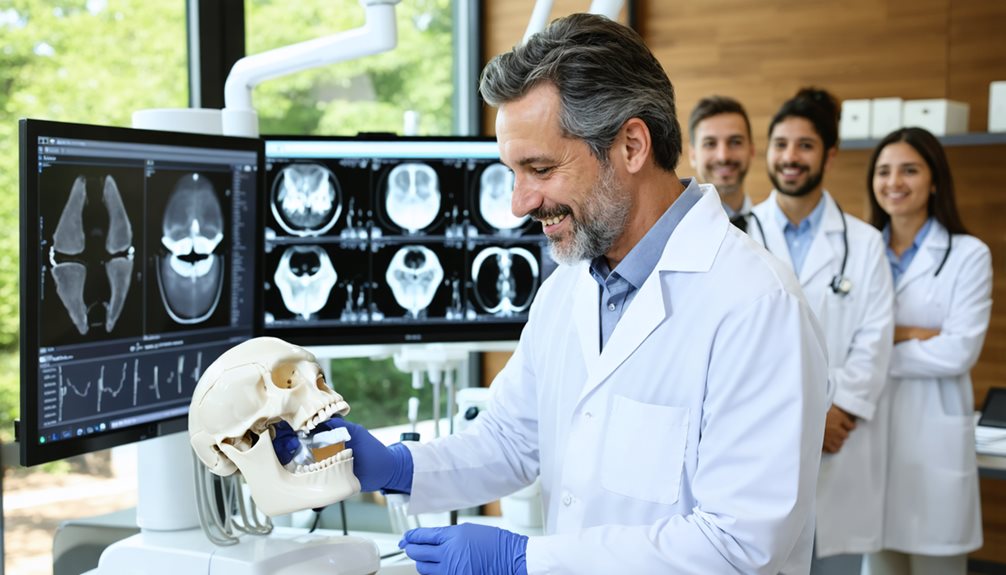
When you’re grappling with the debilitating symptoms of severe TMJ disorders, finding the right dentist can make all the difference. You need professionals who not only understand the intricacies of the condition but also employ cutting-edge diagnostic tools to pinpoint the issue accurately. These experts go beyond standard care, offering treatments like neuromuscular dentistry and arthroscopy. But what truly sets them apart is their patient-centered approach and excellent communication skills, which guarantee you feel supported throughout your treatment. Curious about who leads in this specialized field and how they can transform your experience?
Recognizing Severe TMJ Symptoms
Recognizing severe TMJ symptoms requires a keen understanding of the disorder’s clinical manifestations. You must be vigilant in identifying hallmark indicators such as persistent jaw pain, restricted mandibular movement, and audible joint sounds like clicking or popping. Advanced TMJ diagnosis techniques are essential in distinguishing these symptoms from other craniofacial disorders. Utilizing imaging modalities like MRI or CT scans provides detailed visualization of the joint’s structure, aiding in the accurate assessment of any anomalies.
Comprehensive chronic pain management is vital for those enduring severe TMJ symptoms. You should focus on multimodal strategies that encompass pharmacological treatments, such as NSAIDs or muscle relaxants, alongside non-pharmacological interventions. Physical therapy, which includes jaw exercises and posture training, can greatly enhance joint function and alleviate discomfort. Biofeedback and cognitive-behavioral therapy are also valuable in managing the psychological aspects of chronic pain, promoting relaxation and stress reduction.
Key Qualities of Expert TMJ Dentists
Effective management of TMJ disorders not only relies on understanding symptoms but also on finding the right specialists to address them. When selecting a TMJ dentist, prioritizing certain professional qualities guarantees excellent care. First, a proficient dentist demonstrates extensive knowledge of TMJ pathophysiology and current treatment techniques. You want a specialist who keeps abreast of advanced modalities, such as arthroscopy, occlusal adjustments, and neuromuscular dentistry.
Moreover, patient communication is paramount. An expert TMJ dentist excels in articulating complex clinical information clearly, fostering a collaborative environment. They should encourage open dialogue, making certain you fully understand your diagnosis and treatment plan. This empowers you to make informed decisions about your care.
Precision in diagnostic skills is another essential quality. A competent TMJ dentist employs meticulous clinical examinations and leverages advanced imaging tools, like MRI and CT scans, for accurate diagnosis. They tailor treatment techniques to your specific condition, whether it involves medication, physiotherapy, or surgical intervention.
Lastly, an expert TMJ dentist exhibits empathy and patience. They recognize the chronic nature of TMJ disorders and the need for ongoing management, providing continuous support throughout your treatment journey. By emphasizing these key qualities, you’ll secure a specialist dedicated to restoring your health and comfort.
Top-Rated TMJ Specialists in Your Area
When it comes to finding top-rated TMJ specialists in your area, narrowing down your options can make all the difference in your treatment outcomes. Start by seeking local referrals from trusted healthcare professionals. This will streamline your selection process and guarantee you’re considering qualified candidates. It’s essential to verify the specialist credentials, including board certifications and specific training in temporomandibular joint disorders, as these establish their expertise and capability in addressing complex cases.
To assist in your search, consider the following:
- Consult Your Primary Care Physician: They often have a network of specialists and can provide valuable local referrals.
- Review Specialist Credentials: Look for certifications from recognized dental and medical boards that focus on TMJ disorders.
- Evaluate Patient Reviews: Analyze feedback from previous patients to gauge satisfaction and treatment success rates.
- Assess Accessibility and Technology: Consider the location, office hours, and utilization of advanced diagnostic tools.
Frequently Asked Questions
What Are the Long-Term Effects of Untreated Severe TMJ Disorders?
Untreated severe TMJ disorders can lead to chronic pain and significant jaw dysfunction. You’ll experience persistent discomfort, difficulty chewing, and potential joint degeneration. This could compromise your quality of life, necessitating more complex interventions in the future.
Can Severe TMJ Disorders Lead to Other Health Complications?
Yes, severe TMJ disorders can cause significant health risks. You might experience chronic jaw pain, headaches, or earaches. Over time, untreated disorders may lead to dental wear, misalignment, or even sleep disturbances, impacting overall well-being.
How Can Lifestyle Changes Help Manage Severe TMJ Symptoms?
Adopt dietary modifications to reduce jaw strain, focusing on softer foods. Implement stress management techniques like mindfulness to decrease muscle tension. These lifestyle changes can greatly alleviate severe TMJ symptoms, enhancing your overall control over the condition.
Are There Any New Treatments or Technologies for Severe TMJ Disorders?
You’re exploring cutting-edge treatments for severe TMJ disorders. Robotic therapies provide precise, controlled interventions, enhancing treatment accuracy. Holistic approaches integrate physical therapy and stress management, aiming for thorough symptom relief, empowering you with control over your condition.
What Is the Average Recovery Time for Severe TMJ Treatment?
You should anticipate recovery expectations for severe TMJ treatment to vary. Treatment timelines typically range from several weeks to months, influenced by individual patient factors, treatment modality choices, and adherence to prescribed therapeutic interventions for ideal outcomes.

